A Legacy to Be Proud of Since 1909
We are always bringing in a wide collection of interesting vintage items and so this month I am showcasing some of our recent quite eclectic pieces.
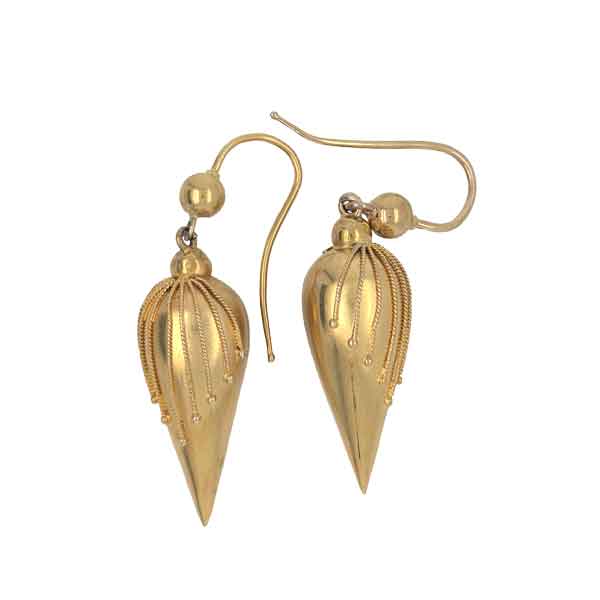
These fabulous ‘Etruscan Revival’ drop earrings we think were made circa 1880, are a great example of this intricate style with tiny gold beads and filigree wire. It is easy to see why ‘Etruscan’ inspired jewellery became highly fashionable in the 19th century.
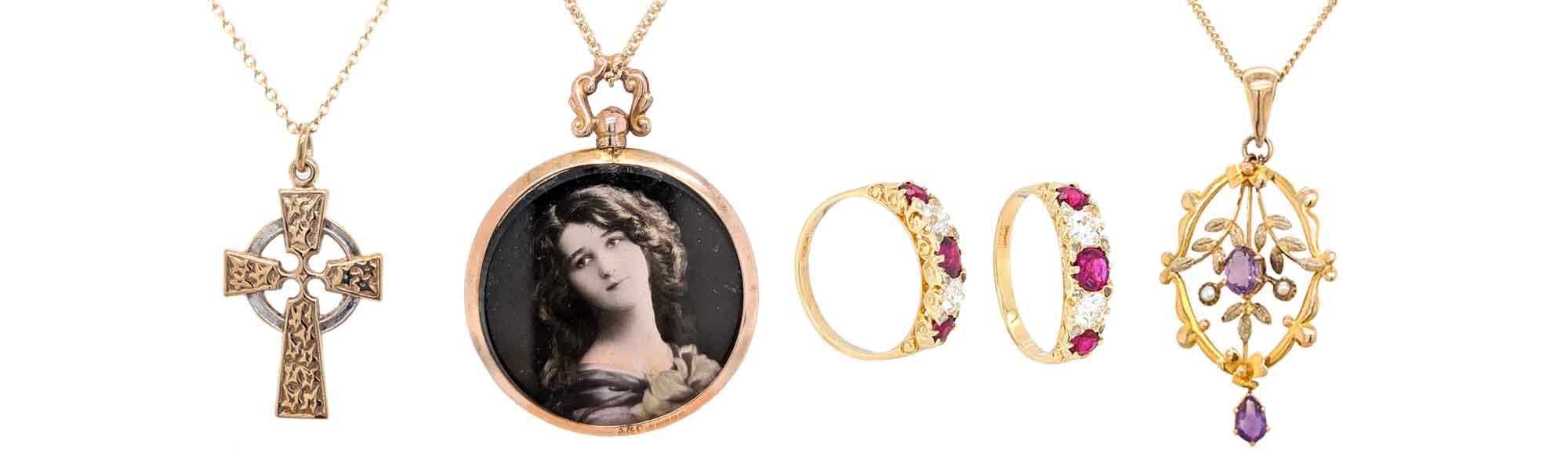
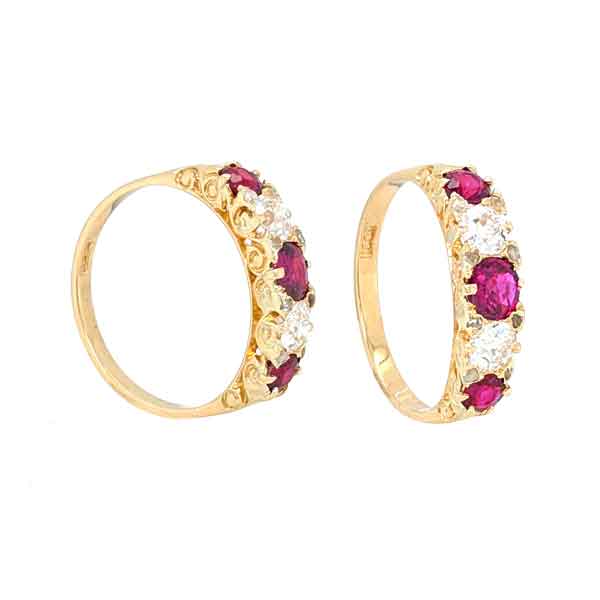
Another popular ring during the Victorian era is called a carved half hoop. I’ve taken two shots of this ruby and diamond ring to illustrate the detailed scroll motifs that decorate the sides of the gallery. By cleverly using a mix of old cut and small rose cut diamonds enables this design to have a clean line.
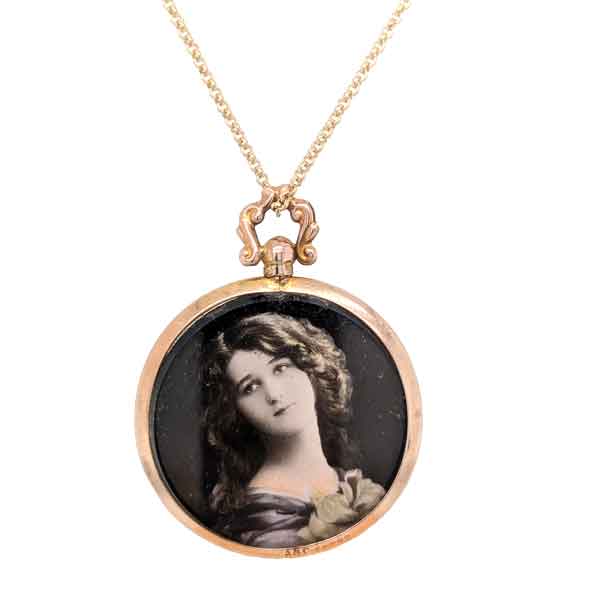
Lockets with their long and intriguing history continue to evolve in terms of design and materials. Their enduring appeal is both visual and emotional as this Edwardian glass fronted locket illustrates perfectly. It is made in 9ct rose gold, dated Birmingham 1928 with original photos still in place.
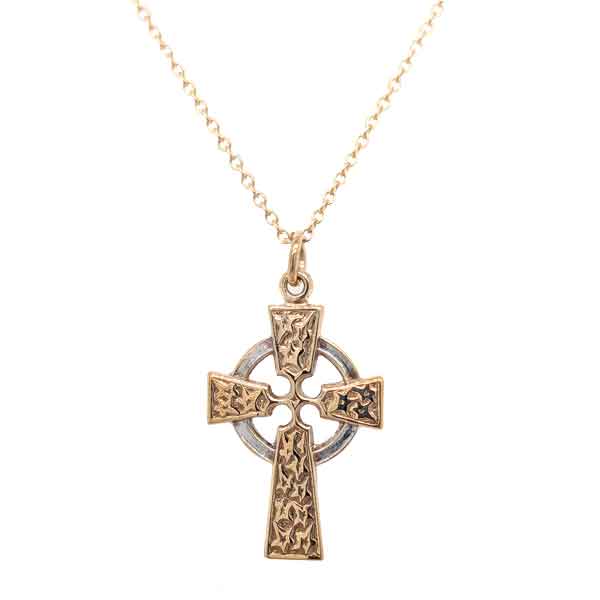
Crosses too have an emotional attachment and I am attracted to this neat Celtic cross decorated with small stars and white ring, crossing Christian and Celtic art elements.
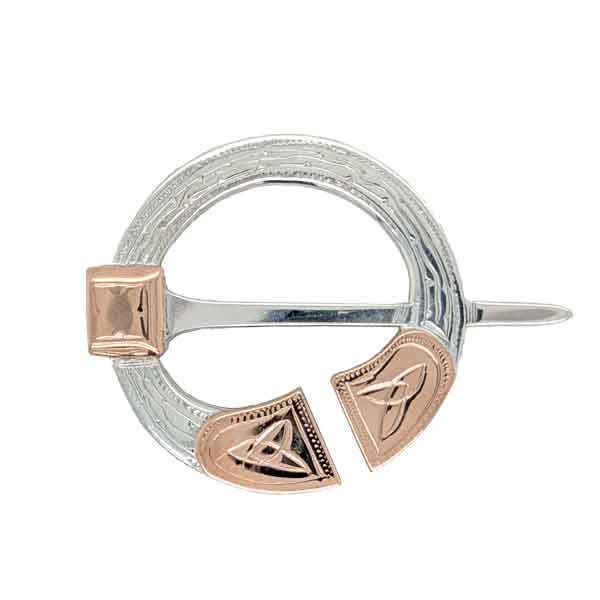
Continuing with the Celtic theme, we’ve included this Irish ‘Navan’ penannular brooch taking its name from an Iron Age Fort. This iconic Celtic brooch design’s original function was to fasten cloaks as well as being decorative. The featured brooch is an upgraded version made from silver with gold elements rather than iron and bronze.
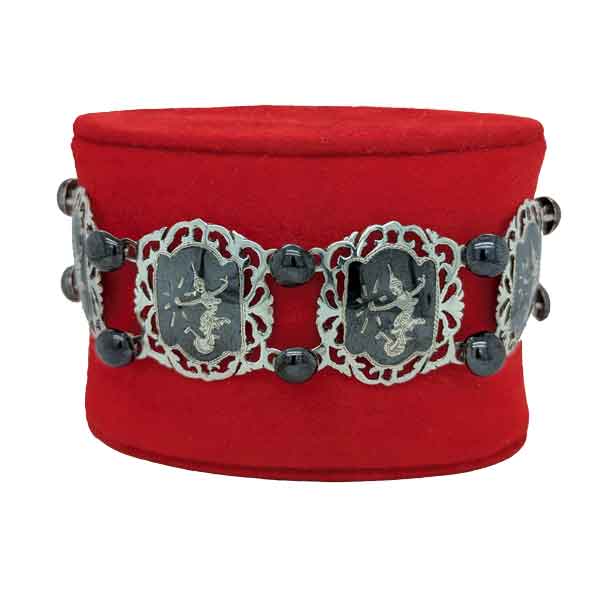
I’ve featured ‘Neillo’ work before, and this 40’s silver bracelet is quite striking with its Siam dancers and clever concealed catch. This technique has been practiced since antiquity; the ‘Niello’ black mixture is an interesting mix of sulphur, copper and lead which fills the spaces between the engraved designs.
The gemstone set in this gold ring with striking purple and white banding is called ‘blue John’ and probably originated from the Treakcliff cavern in Derbyshire. My family and I have visited there a couple of times and it’s certainly worth a visit to see where this beautiful and scarce gemstone is mined. Look out for colours ranging from deep purple, royal blue to pale yellow and creamy white. Its name is believed to have come from the French phrase “bleu et jaune”.
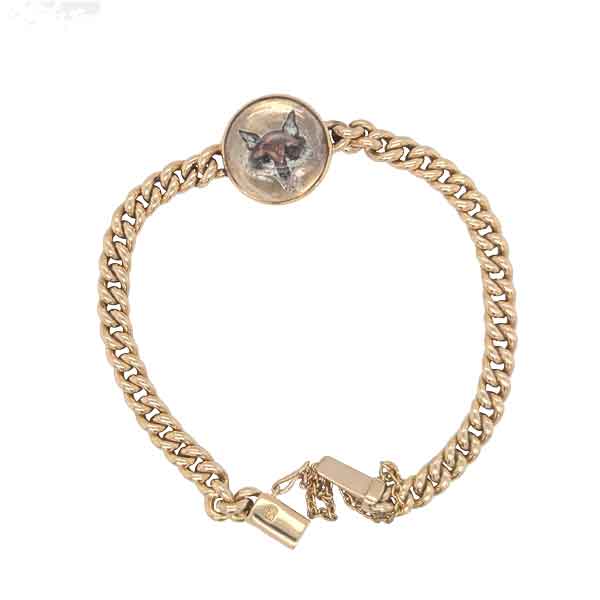
Sometimes I find a piece of quirky jewellery that fascinates me and this vintage fox head bracelet is no exception. Dating is always difficult, but I feel this was made mid nineteenth century when this recognisable style of jewellery became fashionable and remained so until the 1930’s. The distinctive domed fox head uses a technique called reverse intaglio crystal or ‘Essex’ crystal. The rock crystal is reverse carved on a flat base and then painted to give the impression of a three dimensional object. What a fabulous fox!
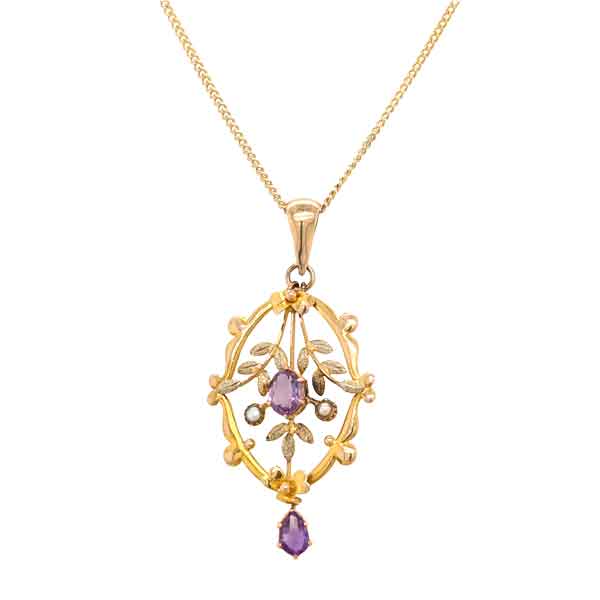
The Edwardian jewellery period embraced lighter and more intricate motifs than the Victorian, using floral and ribbon elements. This sweet rose and yellow gold pendant embraces these details with its delicate textured leaves, amethysts and seed pearls.
I find Jewellery history so fascinating; it captures our stories and remains a tangible link to our past. I do hope I can pass some of my enthusiasm on to you.
Sally x
AA Thornton
1-7 High Street
Kettering
Northampton
NN16 8ST
Monday – Saturday:
10:00am to 4:30pm
Sunday 14th & 21st
11:00am to 3:00pm
Closed Christmas Day to Monday 29th
Re opens Tuesday 30th
Closed New Year’s Day